Date: July 18, 2026 / Auther: EMC
Date: July 18, 2026 / Auther: EMC
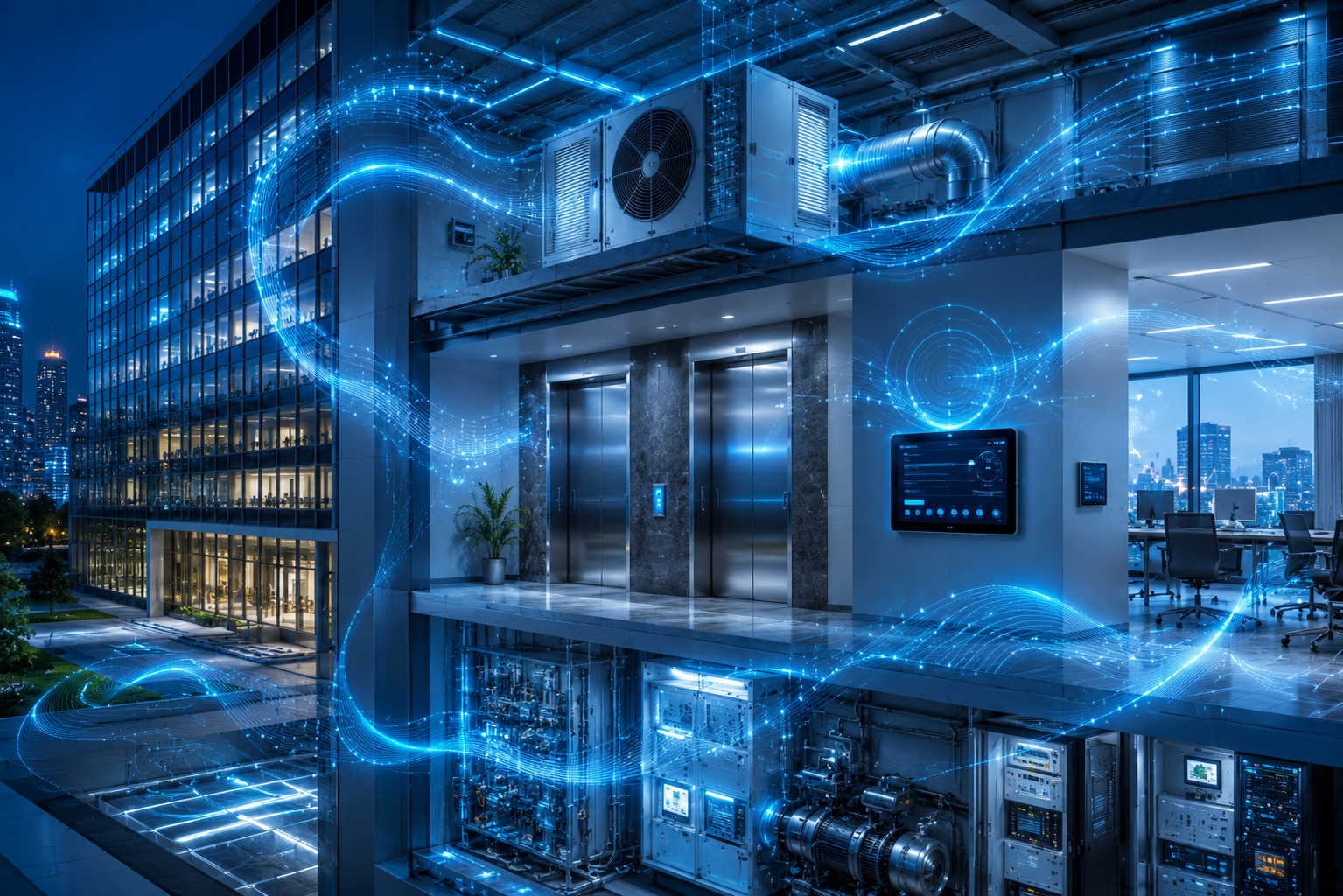
Modern commercial and public structures are far more than concrete and glass; they are highly integrated, living technology ecosystems. A contemporary facility relies on a complex web of interconnected systems—including high-speed elevators, automated HVAC systems, fire and life-safety detectors, biometric security, smart lighting automation, and centralized Building Management Systems (BMS).
Because these systems rely on dense configurations of sensitive microelectronics operating in close proximity, the risk of localized Electromagnetic Interference (EMI) has increased exponentially. Proactive EMC and electromagnetic radiation (EMR) assessments are now mandatory phases in designing, constructing, and operating safe, resilient, and compliant high-rise assets.
At EMC Consortium Limited (EMCCL), we advise premier infrastructure developers, facility managers, and lead engineering teams on identifying, mitigating, and resolving complex electromagnetic compatibility issues before they manifest as costly operational shutdowns or public safety hazards.
Most standard electrical components emit low-level electromagnetic energy during daily operations, which typically remains benign in isolation. However, when high-power industrial machinery—such as heavy elevator motors and high-capacity HVAC compressors—co-exist with low-voltage sensor networks, these emissions accumulate.
Without strategic design-phase mitigation, cumulative EMI can trigger:
Intermittent equipment failures and automated system lockups. Data corruption within Building Management Systems. False alarms in safety-critical fire and security detection networks.
Executing a comprehensive EMC and radiation evaluation of a building’s electrical systems allows engineering teams to resolve potential interference risks early. Integrating shielding and filtering solutions during the design and construction phases dramatically reduces project risk and eliminates the prohibitive costs of retrofitting and replacing active systems after tenant handover.
Vertical transport systems depend on high-power Variable Frequency Drives (VFDs) and massive motor controllers, which are major sources of high-frequency conducted and radiated electromagnetic emissions. When EMC is poorly managed in lift shafts, the resulting EMI can cause unpredictable, hazardous anomalies, including: Irregular elevator cab leveling or sudden stops. Signal corruption in elevator control lines and emergency communication links. Interference with nearby office networks or high-density telecom infrastructure. In-situ, routine EMC validation is essential to guarantee that vertical transport networks remain safe, reliable, and compliant with municipal standards.
To optimize climate control and energy efficiency, modern HVAC systems rely on a vast network of smart sensors, automated actuators, and digital communication buses.
This high density of low-voltage communication makes HVAC infrastructure exceptionally vulnerable to localized electromagnetic interference. EMI can corrupt sensor telemetry, cause controller lag, or trigger total system communication failures. Thorough EMC and radiation testing verifies that environmental controls maintain consistent, reliable performance regardless of the electromagnetic ambient fields within the building.
A robust building services assessment extends beyond elevators and HVAC networks. To guarantee true operational resilience, a holistic EMC evaluation must encompass:
Life-Safety & Fire Alarm Systems: Preventing electromagnetic triggers from causing false alarms or failing to activate during an emergency. High-Definition CCTV & Access Controls: Safeguarding digital security streams from signal degradation. On-Site Data Centers & Telecommunications: Ensuring clean power lines and shielding critical data hubs from surrounding low-frequency magnetic fields.
With decades of proven field experience in infrastructure integration, EMCCL delivers turnkey EMC and EMR assessments tailored specifically to high-density building services. Our specialized engineering activities include:
In-Situ Electromagnetic Emission & Immunity Testing: Comprehensive site analysis of active building subsystems. Electromagnetic Radiation (EMR) Health & Safety Compliance: Verifying that public and workplace environments meet ICNIRP and localized exposure limits. System-Level Diagnostic & Root Cause Analysis: Locating and isolating the specific sources of interference within complex multi-vendor installations. Practical Mitigation Design: Engineering custom, cost-effective shielding, filtering, and grounding configurations. Regulatory Compliance Support: Aligning assets with international standards (IEC, EN, IEEE) to secure final occupancy and certification.
Whether you are managing the design of an upcoming smart-city landmark or diagnosing persistent, unexplained equipment faults in an existing commercial facility, EMCCL provides the technical authority to secure your building's operational future.
What is a building service EMC & radiation assessment? This is a technical engineering assessment that measures the electromagnetic emissions, susceptibility, and radiation profiles of a building’s electrical systems (including lifts, HVAC, and security networks). It guarantees that these systems do not cause mutual degradation, are resilient against external ambient noise, and do not emit electromagnetic fields that exceed regulatory health and safety limits. Why do elevators require dedicated EMC attention? Elevator systems utilize high-power electric motors and Variable Frequency Drives (VFDs) that generate significant electrical noise. If left unmanaged, this noise can couple into nearby data and communication lines, causing erratic carriage controls or failing adjacent IT networks. Can EMI affect the efficiency of climate control systems? Yes. Electromagnetic interference can distort the analog and digital telemetry sent by HVAC temperature, pressure, and airflow sensors. This distortion leads to inaccurate readings, slow response times, and sub-optimal, energy-inefficient operation. Is radiation assessment different from standard EMC testing? Yes, though they are highly complementary. Standard EMC testing analyzes whether equipment will interfere with other electronics or fail due to surrounding electrical noise. A radiation assessment specifically measures the strength of electromagnetic fields (EMF) to ensure they are completely safe for human health (protecting tenants, workers, and people with medical implants) and comply with public exposure regulations. When is the best time to conduct an EMC building assessment? Ideally, during the initial design and blueprint phase of a construction project. Resolving cable routing, grounding layout, and shielding specifications early is highly cost-effective. However, assessments are equally critical for existing assets undergoing major electrical upgrades or experiencing unexplained equipment glitches.
Electromagnetic Compatibility Consortium Limited (EMCCL) Phone: +852 3899 4689 Business Hours: Mon – Fri, 9:00 AM – 6:00 PM 📧 Email: info@emccl.org 🌐 Website: www.emccl.org
Reach out to our team today for a consultation on hospital EMC assessments, compliance testing, and system-level electromagnetic risk management.